


Why is tree lopping important? For most property owners, the question comes up when a tree has clearly become a problem: a damaged limb hanging over the driveway, branches pressing against the roof, or a canopy that has outgrown its space. In Australia, tree lopping is the term many people reach for when they mean removing large branches or substantially reducing a tree. What matters is that work of that scale is never just cutting branches back. Removing significant portions of a tree changes its structure and its future, so the right treatment always depends on the individual tree. This article explains when tree lopping may genuinely be needed, the risks of doing it poorly and how an arborist decides on the appropriate approach.
Why Is Tree Lopping Important in Some Situations?
Substantial branch reduction or removal may be considered when a tree presents a defined problem, such as:
- Damaged or unstable branches
- Branches interfering with buildings or other structures
- Excessive weight on compromised limbs
- Storm-damaged sections of canopy
- Clearance requirements around buildings or infrastructure
- A specific structural concern identified in the tree
The common thread is that the work addresses an identified issue. Lopping does not automatically make a tree healthier, and a tree should not be cut back simply because it has grown large. When there is a genuine problem, though, removing the right branches in the right way protects the property, the people using it and often the tree itself. If you are unsure whether a tree has reached that point, a tree risk assessment will identify what, if anything, needs to be done.
What Is Tree Lopping?
Tree lopping is a broad term, and in Australia homeowners commonly use it to describe removing large branches or reducing a substantial part of a tree’s canopy. In everyday conversation it covers everything from taking the top out of a tree to cutting back limbs over a fence line.
Professional arborists tend to be more specific, because different pruning techniques suit different objectives, and the technique chosen affects how the tree responds. We have covered that distinction in detail in our guide to tree lopping vs tree pruning, so this article concentrates on when significant branch removal may be needed and how that decision should be made.
When Might a Tree Need Significant Branch Reduction?
These are the situations where property owners most often need substantial work done on a tree:
- Large limbs damaged in severe weather
- Branches extending over the house, garage or shed
- Limbs with poor attachment points that are likely to fail
- Excessive weight built up on long, extended branches
- Clearance needed around buildings, driveways or access ways
- Branches interfering with infrastructure
- A section of canopy identified as presenting a risk
A large tree should not automatically be reduced because of its size alone. Size is not a defect. What matters is whether a specific issue exists, where it is in the tree and what the least damaging way of resolving it is. Wherever possible, have an arborist assess the tree to determine the underlying issue before deciding how much vegetation actually needs to come off.
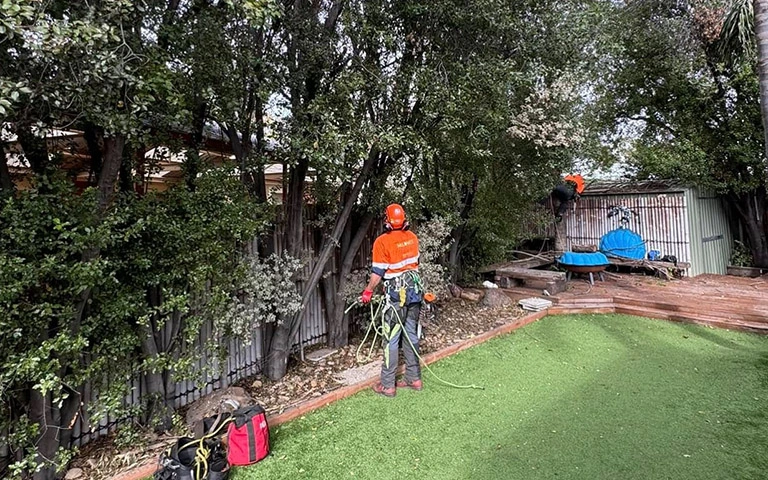
Is Tree Lopping Bad for Trees?
It can be. Indiscriminate, excessive or incorrectly performed lopping is one of the more damaging things that can happen to a mature tree. The potential consequences include:
- Excessive canopy loss that starves the tree of energy
- Large wounds that the tree struggles to seal
- Significant stress on the tree
- Vigorous regrowth that is poorly attached and prone to failure
- Permanently altered tree structure
- Increased exposure of the remaining branches to wind and sun
- Long-term management problems that cost more to fix than the original issue
The difference between harmful lopping and legitimate tree work comes down to how much is removed and where the cuts are made. Professionally assessed work removes what the situation requires and no more, with cuts positioned so the tree can respond well. That is a very different exercise from cutting back a large portion of canopy because it looks tidy. In many cases, considered tree pruning achieves the objective with far less impact on the tree.
Why Mature Trees Require More Careful Assessment
The larger and older a tree is, the more thought needs to go into any decision about significant branch removal. Before recommending an approach, an arborist weighs up:
- The species and how it responds to pruning
- The tree’s age and overall condition
- Branch structure and attachment
- Any previous pruning or lopping history
- How the canopy weight is distributed
- Decay, cavities or other defects
- Surrounding buildings and structures
- What sits beneath the tree, from play areas to parked cars
- The tree’s capacity to recover from the proposed work
Two trees of similar size can require completely different approaches once these factors are considered. A qualified arborist reads the individual tree rather than applying a standard formula, which is why an arboricultural consultation is worthwhile before major work on a significant tree.
Tree Lopping After Storm or Structural Damage
Storms and high winds are among the most common reasons substantial branch work becomes urgent. A damaged tree may be left with hanging limbs, cracked unions, partially detached branches or sections that are no longer stable, and those need professional attention promptly.
The right response depends on what the damage has left behind. It may involve selective removal of the damaged limbs, broader pruning, substantial reduction of the affected canopy or, in severe cases, removal of the tree. Storm damage does not automatically mean a tree has to go. Many storm-affected trees can be stabilised and retained once the damaged material is properly removed. For urgent situations, our emergency tree removal team can make the site safe first, then assess what the tree needs longer term, up to and including full removal where warranted.
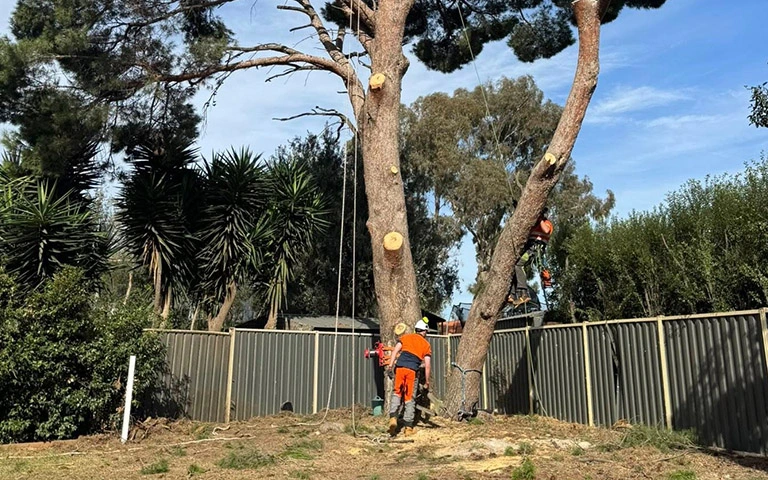
Why Professional Tree Lopping Is More Than Cutting Branches
On a mature tree, every significant limb removed involves a series of decisions:
- Which branches should be removed, and which should stay
- Where each cut should be made for the tree’s recovery
- How much canopy can reasonably be taken without harming the tree
- How large branches will be rigged and lowered under control
- How surrounding buildings and property will be protected
- How the crew and equipment will work within the site’s access limits
- How workers and the public are kept safe throughout
For larger trees, this often means climbing systems, elevated work platforms and controlled rigging, with heavy sections lowered in a managed way rather than dropped. The skill is not in the cutting. It is in knowing what to cut, what to leave and how to bring heavy timber down without incident. That knowledge is what you are engaging when you use a professional tree lopping service rather than whoever owns the biggest chainsaw.
When Tree Pruning May Be a Better Option
The objective is never to remove as much growth as possible. Depending on the tree and the problem, selective pruning may provide the required clearance, remove the defective branches or improve the structure without substantial canopy reduction. A lighter, well-targeted prune is often better for the tree and for the long-term look of the property.
For a detailed explanation of the difference and when each approach fits, see our tree pruning services and our guide to tree lopping vs tree pruning.
Have the Tree Assessed Before Deciding What to Remove
The safest way to approach any significant tree work is to start with an assessment rather than a chainsaw. An arborist will consider the tree’s condition, structural defects, branch attachment, the surrounding property, access, the species, any previous pruning and the outcome you are trying to achieve.
The recommendation might be pruning, targeted branch reduction, lopping-related work, ongoing monitoring or, where necessary, removal. What matters is that the decision is based on the tree in front of you rather than an assumption that heavy cutting is always the answer.
Not Sure What Your Tree Needs?
Before committing to significant branch removal, have the tree properly assessed. Milone’s Tree Solutions can inspect the tree, explain what is actually required and carry out the work safely.
Frequently Asked Questions
Significant branch removal can be important when a tree has damaged limbs, needs clearance from buildings or infrastructure, or has an identified structural concern. The appropriate treatment always depends on the individual tree, which is why assessment should come first.
Excessive or poorly performed lopping can seriously damage a tree, causing stress, large wounds and weakly attached regrowth. That is why significant canopy reduction should be assessed and carried out by a qualified arborist.
Tree lopping, also known as tree topping, is a tree pruning technique that involves the removal of branches and foliage from the upper canopy or the entire top section of a tree. It is usually done to reduce the tree’s height or size, reshape the canopy, or address specific issues related to the tree’s health, safety, or aesthetics.
Pricing varies with the size of the tree, access to the site, the tree’s condition, the equipment required, the complexity of the work and the amount of material to be removed. An on-site assessment is the only reliable way to price the work.
Yes, particularly for mature trees, storm-damaged trees, trees with structural concerns or trees in difficult-to-access locations. Assessment ensures the right branches are removed for the right reasons, and often identifies a less invasive option.
Still have questions?
If you can’t find an answer to your question in the FAQ’s above, you can always contact us and we’ll respond asap.
Get a Quote now!
"*" indicates required fields


