

Why is tree lopping important? For most property owners, the question comes up when a tree has clearly become a problem: a damaged limb hanging over the driveway, branches pressing against the roof, or a canopy that has outgrown its space. In Australia, tree lopping is the term many people reach for when they mean removing large branches or substantially reducing a tree. What matters is that work of that scale is never just cutting branches back. Removing significant portions of a tree changes its structure and its future, so the right treatment always depends on the individual tree. This article explains when tree lopping may genuinely be needed, the risks of doing it poorly and how an arborist decides on the appropriate approach.
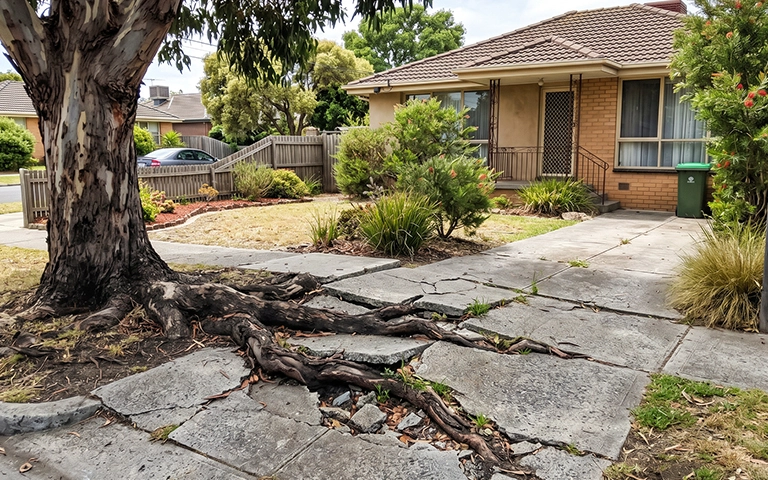
A thick root lifting the edge of a path, roots left behind after a tree has come down, or new shoots appearing where a tree used to be. These are the problems that lead many homeowners to look into tree root removal. Sometimes the roots are a trip hazard, sometimes they are in the way of a new garden bed or extension, and sometimes the worry is simply not knowing what they are doing below the surface.
Before deciding what to do, it helps to understand one important distinction. Removing roots from a living tree is very different from removing the remaining root system of a tree that has already been removed. A living tree depends on its roots to stay upright and healthy, so cutting them carries real risks. The roots of a tree that has already been removed are a different matter, and in many cases they do not need to be dug out at all.
This guide explains when root removal is actually necessary, what happens to roots left in the ground, and why significant root work is a job for trained professionals.
When Is Tree Root Removal Necessary?
Root removal is usually considered for a specific reason. Common situations include:
- roots remaining after a tree has been removed, where the area is needed for something else
- roots lifting or interfering with paving, edging, lawns or garden beds
- exposed surface roots creating a trip hazard in a frequently used area
- unwanted shoots or suckers growing from the remaining root system
- roots in the footprint of planned construction, a pool or new landscaping
- a diseased or damaged root system associated with a tree that is being removed
- roots connected to an unwanted tree or stump
A root near a driveway, pipe or building is not automatically causing damage. Roots and structures often sit close together without any problem, and cracking can have other causes. Where roots and underground services are both involved, our article on tree roots and underground pipes explains how problems typically develop and what to look for.
Can You Remove Roots From a Living Tree?
Sometimes, but it needs care. A tree’s major roots do two essential jobs. They anchor the tree in the ground, and they absorb the water and nutrients the tree needs to survive. Removing or cutting roots without understanding where they run and how much the tree relies on them can:
- destabilise the tree, particularly in wind or wet soil
- affect the tree’s health by reducing its ability to take up water and nutrients
- increase stress, which can show up later as thinning foliage or dieback
- create wounds that act as entry points for decay or disease
- contribute to a gradual decline
The effects are often delayed. A tree can look healthy straight after root cutting, then decline or become unstable months later. Our article on tree damage after construction covers how root loss from excavation and trenching can affect trees over time.
For more complex cases, such as tree root removal in Melbourne, it’s worth having the area assessed first to understand what’s causing the issue and what approach is appropriate. An assessment considers which roots are structural, how much root loss the tree can tolerate and whether there is a better solution, such as redesigning a path or garden bed so the roots can stay. Some trees may also be protected by local planning controls, so it is worth checking whether a permit may be required before work goes ahead.
Tree Root Removal vs Stump Removal: What’s the Difference?
These two terms are often used interchangeably, but they describe different work.
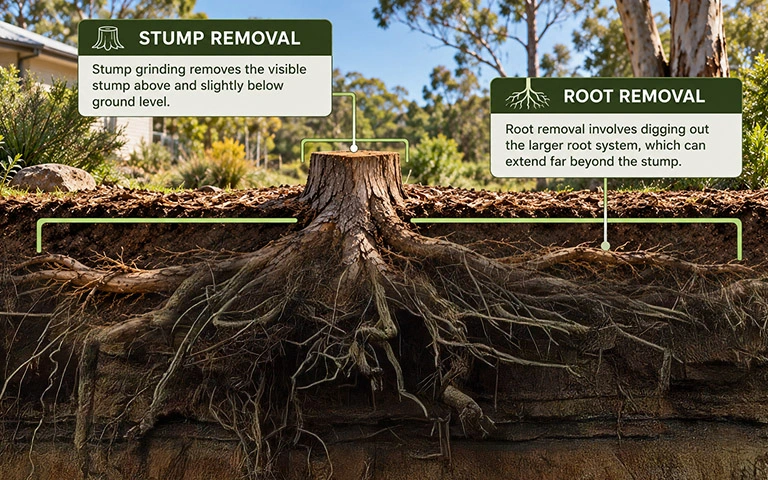
Stump removal or stump grinding deals mainly with the remaining trunk base. Grinding chips the stump down below ground level so the area can be covered, turfed or replanted.
Root removal deals with the roots that extend out through the surrounding soil, sometimes well beyond the stump.
The key point is that stump grinding does not necessarily mean every root has been physically excavated from the property. Milone’s stump grinding service chips away the stump while leaving the remaining roots to naturally decompose. Where roots need further attention, that is a separate decision based on the site. If you would like to compare the main stump removal methods, our guide on the best way to remove a stump safely explains the options.
How Are Tree Roots Professionally Removed?
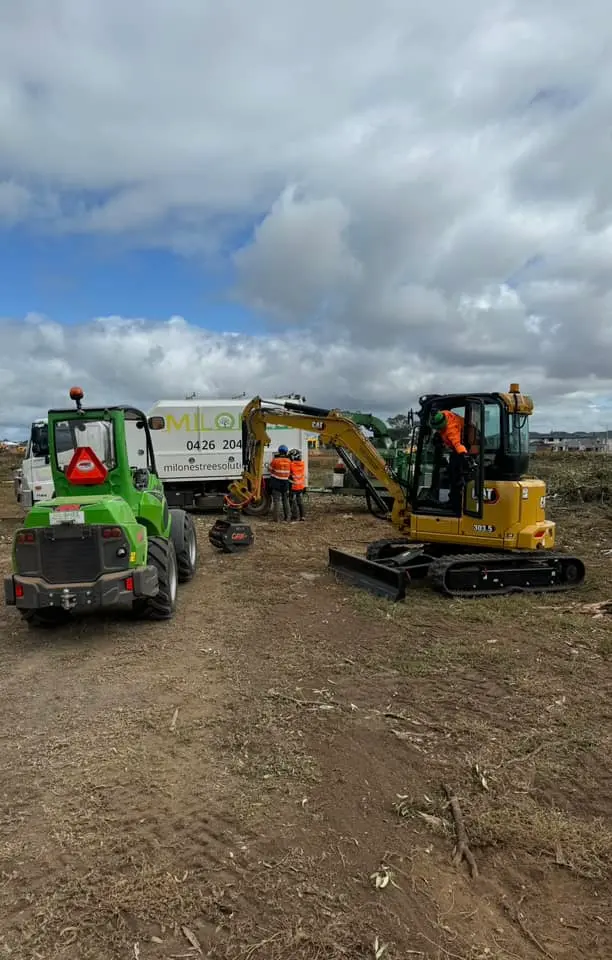
There is no single method for tree root removal. The right approach depends on whether the tree is alive or already removed, the size and location of the roots, site access and what is nearby, including buildings, paving and underground services. Understanding when tree root removal in Melbourne may be necessary can help property owners make informed decisions about managing root damage, safety risks and surrounding structures.
Professional root work may involve:
- an assessment of the tree and its root system to identify which roots matter and which can be addressed
- stump grinding where a stump is still in place
- careful excavation of selected roots that are causing a specific problem
- removal of remaining root material where the area is needed for construction, paving or planting
- management of regrowth where shoots or suckers continue to appear from surviving roots
- machinery where access and site conditions allow, with hand work used where machinery is unsuitable
Underground services are one of the main reasons this work should not be improvised. Water, sewer, gas and electrical lines can run close to tree roots, and digging without knowing what is there creates real safety risks. Our article on the risks of DIY tree stump removal explains why stump and root work is better left to trained operators with the right equipment.
Do Tree Roots Keep Growing After a Tree Is Removed?
It depends on the species and whether the remaining root system is still viable. When many trees are cut down, the roots no longer receive energy from the canopy and gradually die and break down in the soil. Other species respond very differently. Some can send up new shoots or suckers from surviving roots or stump tissue, sometimes several metres from where the tree stood.
So it is risky to assume roots always stop growing the moment a tree is removed. Identifying the species and assessing the stump and root system helps predict whether regrowth is likely. If shoots do appear, part of the root system is probably still alive, and it is worth having it looked at rather than repeatedly cutting them back.
What Happens If Tree Roots Are Left in the Ground?
Often, nothing that needs fixing. Complete root excavation is not always necessary, and digging out an entire root system can disturb a garden or nearby structures more than the roots ever would. Depending on the species and soil, roots left in the ground will often decay gradually.
Removal or further management may be worth considering where remaining roots interfere with:
- construction, footings or a planned extension
- paving, driveways or landscaping works
- future planting in the same spot
- site access for vehicles or machinery
- unwanted regrowth from viable roots
- safety, such as an ongoing trip hazard
It comes down to how the space will be used. A lawn may need nothing more than stump grinding, while a new slab in the same spot may need more root material dealt with.
Can Tree Roots Damage Pipes, Paving or Structures?
They can, but the relationship is often misunderstood. Roots grow where moisture, oxygen and nutrients are available. They do not usually break into intact pipes. Instead, they tend to exploit existing cracks, loose joints or defects where water is escaping into the soil. Once inside, they can grow and contribute to blockages.
Shallow roots beneath a path or driveway can lift and crack surfaces as they thicken. Even then, soil movement, drainage and construction quality can all play a part.
Where pipes or structures are suspected to be affected, the right inspection matters. That may mean a plumber for the drains and an arborist for the tree, so the tree is not removed or root pruned unnecessarily. Our guide to roots and underground pipes covers the warning signs.
How Much Does Tree Root Removal Cost?
There is no fixed price, because the work varies so much between properties. The main cost factors include:
- the size and extent of the roots
- the tree species
- whether the tree or stump has already been removed
- how easily the area can be accessed
- the machinery required
- how close the roots are to buildings and other structures
- the location of underground services
- the amount of excavation involved
- disposal of root material
- any site restoration needed afterwards, such as backfilling and levelling
The most reliable way to understand the cost is an on-site assessment and quote for your property.
When Should You Call an Arborist About Problem Tree Roots?
It is worth calling an arborist when:
- the roots belong to a mature living tree
- large structural roots are involved
- roots are close to buildings, driveways or underground infrastructure
- you are unsure whether the tree is stable
- there are signs of disease or decay around the base or roots
- significant excavation is planned near the tree
- the tree itself may need to be removed
- shoots or suckers keep coming back after removal
Milone’s arborist tree assessments include examination of visible root systems and root stability, and Tree Protection Zone and Structural Root Zone calculations where development is planned. Where a tree does need to come out, Milone’s provides tree removal across Melbourne and regional Victoria, along with stump grinding. If you are looking for tree root removal in Melbourne, or searching for tree root removal near me, an assessment is the right place to start.
Concerned About Problem Tree Roots?
If tree roots are affecting your property or you are unsure whether they can be safely removed, Milone’s Tree Solutions can assess the tree, root system and surrounding area and recommend an appropriate solution.
Call 0426 204 514 or email info@milonestreesolutions.com.au.
Frequently Asked Questions
It depends on which roots are affected, their size, location, tree species and the amount of root loss. Removing major roots can affect tree health or stability, so significant root removal around a living tree should be professionally assessed.
Many roots gradually die and decompose once the tree is removed, but some species can produce new shoots or suckers from surviving roots or stump tissue.
Stump grinding primarily removes the stump and material around its immediate base. It does not normally mean that every root extending through the surrounding soil has been excavated.
Not necessarily. Roots can often remain and naturally decay. Removal may be considered when they interfere with construction, landscaping, safety or unwanted regrowth.
Cutting significant roots can affect the health and structural stability of a living tree. Large or structural roots should be assessed before removal.
Still have questions?
If you can’t find an answer to your question in the FAQ’s above, you can always contact us and we’ll respond asap.
Get a Quote now!
"*" indicates required fields


