


Tree removal looks simple from the outside. Cut the tree down, clear the debris, move on.
In reality, it’s one of the highest-risk tasks on a property. A small misjudgement can lead to roof damage, broken fences, vehicle impact, powerline issues, or serious injury. What makes it more complex is that trees rarely behave the way people expect once cutting begins.
That’s why tree removal is never just about cutting wood. It’s about understanding structure, weight, environment, and control.
At Milones Tree Solutions, we’re often called in after DIY attempts or low-cost removals go wrong. And in most cases, the issue isn’t effort — it’s underestimating what the tree is capable of doing once it starts moving.
Underestimating the size and behaviour of a tree
One of the most common mistakes in tree removal is assuming a tree will fall exactly where it’s intended to. Trees are not uniform structures. They carry uneven weight distribution, hidden decay pockets, and tension forces that change how they move when cut.
A tree that looks manageable can behave very differently once sections begin to drop. Large limbs can swing unpredictably, trunks can twist during descent, and internal defects can cause sudden changes in direction.
This is where property damage often begins — not from the final cut, but from the assumptions made beforehand.
Branches that seem stable can fail early in the process, especially when load shifts suddenly. Roofs, fences, and vehicles are commonly within range of falling material when these factors aren’t properly accounted for.
A professional approach to tree removal safety always starts with understanding how the tree is likely to behave, not just where it is meant to land.
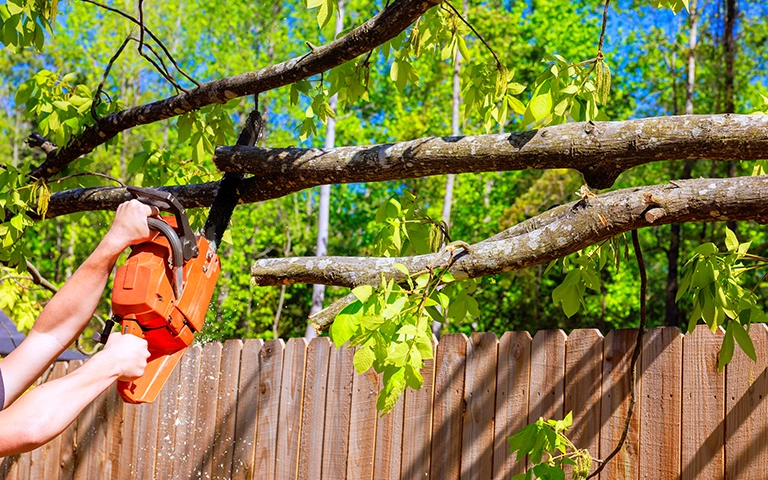
Failing to assess what’s around the tree
Another major risk comes from the surrounding environment. Trees don’t exist in isolation, and neither does the risk involved in removing them.
Homes, sheds, boundary fences, pools, driveways, and neighbouring properties all influence how removal needs to be planned. Powerlines introduce an additional layer of risk that cannot be managed without proper training and equipment.
Many incidents during tree cutting service work occur not because the tree itself is unstable, but because the surrounding space was not properly factored into the removal process.
Even a well-executed cut can become a problem if a branch swings slightly off line or a trunk section rotates unexpectedly during descent.
This is why professional planning matters. A controlled approach considers fall zones, exclusion areas, and escape paths long before any cutting begins.
Why DIY tree removal often goes wrong
DIY removal is one of the most common causes of property damage and injury. On the surface, it can seem like a way to save money, but the risks increase quickly once work begins.
Chainsaws, ladders, ropes, and uneven footing create a high-risk environment. Without rigging systems or controlled dismantling techniques, even small trees can become dangerous.
Many people searching for professional tree removal near me underestimate how quickly things can escalate when a cut goes wrong. A branch that falls the wrong way or a trunk that splits unexpectedly can cause immediate damage or serious injury.
Insurance is another overlooked issue. If damage occurs during unauthorised or unsafe removal, cover may not apply in the way people expect.
The reality is simple: is DIY tree removal dangerous is not a theoretical question. It’s a practical one that is often answered only after something has gone wrong.
Professional arborists don’t just remove trees — they manage risk through controlled sequencing, rigging systems, and experience with unpredictable movement.
Ignoring internal defects and hidden weaknesses
Trees often look stable from the outside even when internal conditions tell a different story.
Decay, hollow sections, cracks, pest activity, and dead limbs all affect how a tree behaves during removal. These issues don’t always change appearance dramatically, which is why they’re frequently missed.
When these defects are present, the tree may shift unexpectedly during cutting. Sections may drop earlier than anticipated, or weight may redistribute suddenly, changing the intended fall direction.
This is where dangerous tree removal becomes particularly complex. A tree that looks straightforward can behave unpredictably once structural weaknesses are exposed during cutting.
An arborist tree removal approach accounts for these conditions before work begins, adjusting technique and sequencing based on internal structure, not just external appearance.
A proper tree risk assessment can help identify these issues before any removal work starts, reducing the chance of unexpected movement or property damage.
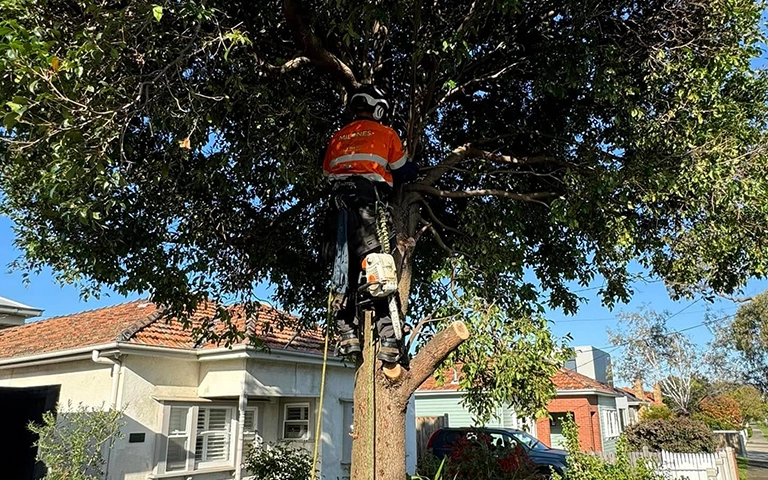
Why planning is the difference between control and chaos
Safe removal is not about speed. It’s about control.
Professional arborists approach tree removal as a staged process. Instead of bringing the whole tree down at once, sections are often dismantled in a controlled sequence. This reduces weight load, manages movement, and ensures each stage can be handled safely.
Site planning plays a major role in this. Access points, drop zones, rigging anchor points, and exclusion areas are all mapped out before work begins. Traffic management may also be required in tighter residential or commercial environments.
Equipment selection is equally important. Not every tree can be managed with basic tools. Larger or structurally compromised trees often require cranes, rigging systems, or advanced lowering techniques.
Emergency contingencies are also part of the process. Wind changes, unexpected limb failure, or hidden decay can all alter conditions mid-job. A professional setup allows for adjustment without increasing risk.
This level of preparation is what separates controlled tree removal from reactive cutting.
When tree removal becomes an emergency situation
Not all tree work is planned. Storm damage, sudden cracking, leaning trees, or partially fallen sections can require urgent response.
In these situations, emergency tree removal is often focused on stabilising the site first, then removing hazards in a controlled way. These jobs carry higher risk because the tree is already compromised and may be under tension.
Quick action is important, but so is caution. A rushed approach without proper assessment can create additional damage or worsen instability.
A qualified arborist will assess whether partial dismantling, full removal, or staged stabilisation is required depending on conditions.
The importance of professional arborist involvement
Professional involvement is not just about equipment — it’s about judgement.
Experienced arborists understand how different species behave, how decay affects structure, and how environmental conditions influence movement during removal.
A formal tree risk assessment helps determine the safest approach before work begins. This includes evaluating structural integrity, site hazards, and potential impact zones.
In many cases, removal is not just about eliminating a tree, but ensuring surrounding assets remain protected throughout the process.
For property owners, schools, commercial sites, and body corporates, this level of planning reduces both physical risk and liability concerns.
Services such as arborist reports and arboricultural consultation provide additional clarity when decisions need to be made around large or complex trees.
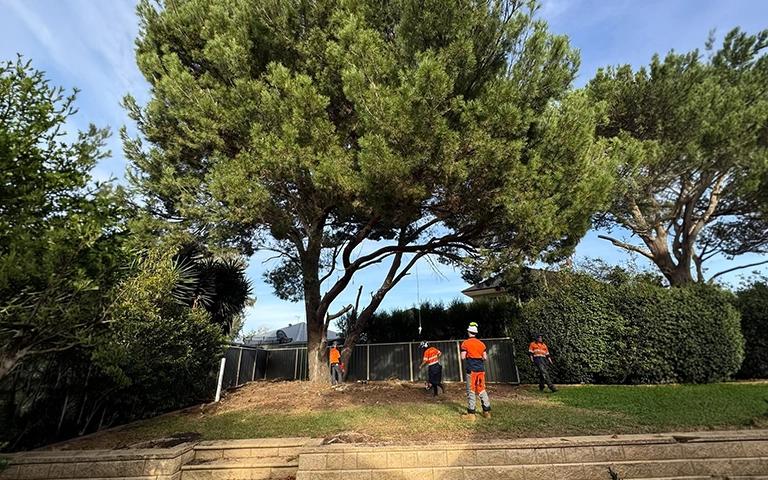
Removing trees safely starts before the first cut
Most problems associated with tree removal don’t happen at the end of the job — they happen before it starts. Poor planning, missed defects, and underestimated risks are usually what lead to property damage or unsafe outcomes.
A controlled approach is always about preparation first, execution second.
If you’re considering removing a tree on your property, it’s worth getting a professional opinion before any cutting begins. What looks simple from the ground can behave very differently once work starts.
The team at Milone’s Tree Solutions can assess the situation, identify risks, and plan a safe and practical approach whether that involves removal, pruning, or staged management.
If you’re planning tree work or unsure about the risks, it’s worth getting it checked first.
Milones Tree Solutions can assess your tree, identify potential hazards, and provide safe, practical advice before tree removal becomes a costly problem.
Frequently Asked Questions
Yes. If not properly planned, branches or trunk sections can fall onto roofs, fences, vehicles, or neighbouring properties during removal.
Yes. Without training, equipment, and understanding of tree behaviour, DIY removal can result in serious injury and property damage.
Any large tree, structurally compromised tree, or tree near buildings, fences, or powerlines should be assessed by a qualified arborist before removal.
Yes. Wind, internal decay, incorrect cutting techniques, or uneven weight distribution can all cause unpredictable movement.
Some trees are protected and require permits before removal. An arborist can help determine whether approval is needed.
Still have questions?
If you can’t find an answer to your question in the FAQ’s above, you can always contact us and we’ll respond asap.
Get a Quote now!
"*" indicates required fields


