

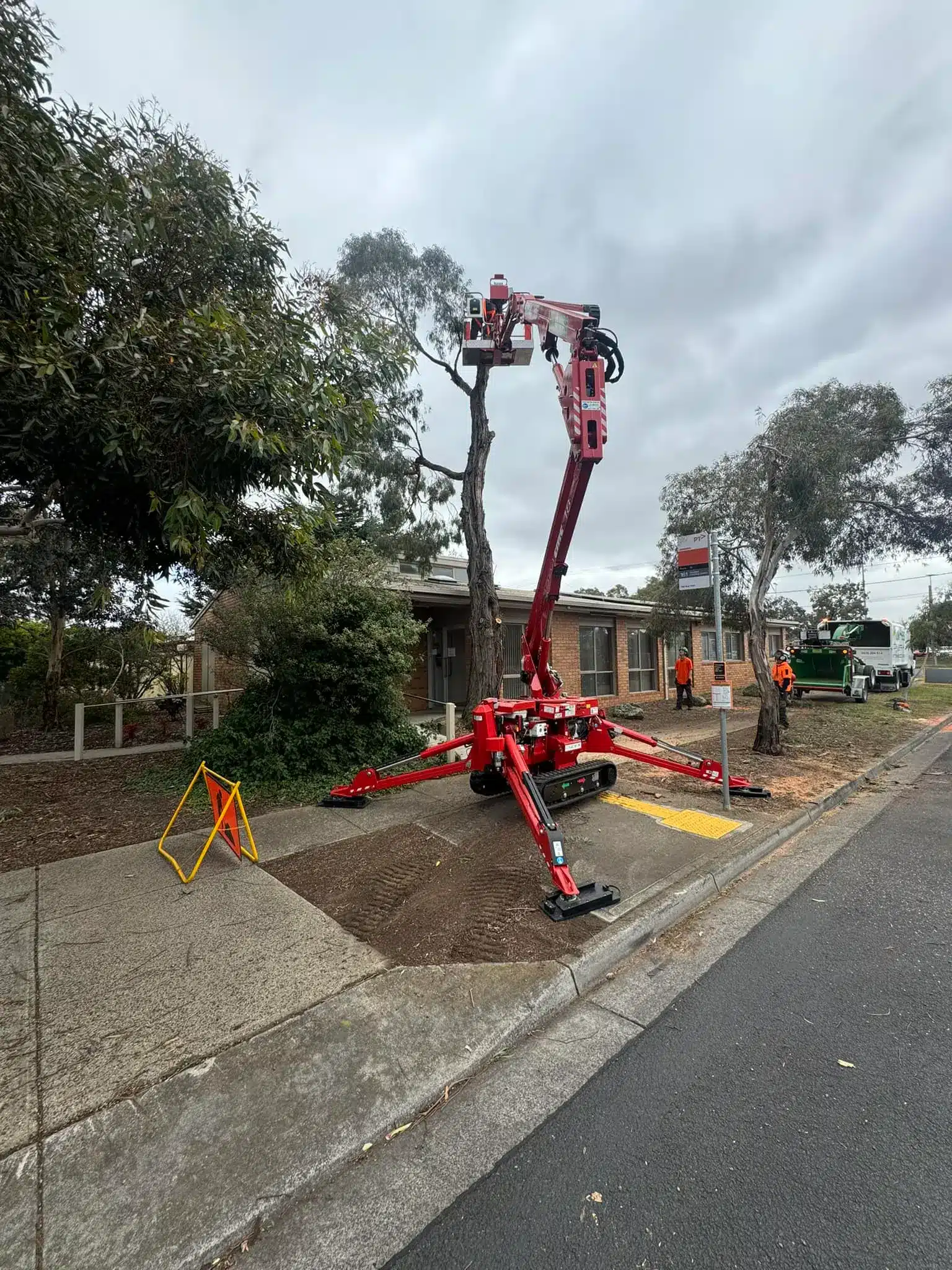
Removing a large tree is a very different job from cutting down a small tree in an open paddock. Mature trees carry heavy limbs, substantial trunks and wide canopies, and in Melbourne they are often positioned close to houses, fences, neighbouring properties, roads and other infrastructure. The challenge is rarely the cutting itself. It is working out how the tree can be dismantled and removed while everything around it is protected. That is why large trees call for a specialist tree removal service with the training, equipment and planning to manage the whole job, not just the tree.
What Makes Large Tree Removal More Complex?
Several factors combine to make large-tree work more demanding than routine tree removal:
- Tree height and canopy spread
- The weight of large limbs
- Trunk diameter
- The structural condition of the tree
- Restricted access to the tree
- Nearby buildings and fences
- Roads and public areas
- Overhead services and surrounding infrastructure
- Limited space for branches and timber to be lowered
Each of these factors changes how the work needs to be approached. Two trees of similar height can require completely different removal methods depending on their condition and what surrounds them. A sound tree in a clear corner of a large block is one job. The same species leaning over a house, with a decayed union and a narrow side gate for access, is another job entirely. Understanding large tree removal risks before work begins is what separates a planned removal from a risky one, which is why a professional tree assessment is the sensible starting point.
Why Tree Assessment Comes Before the Removal Work
Before any cutting starts, an arborist needs a clear picture of the tree and the site. A proper assessment covers:
- The overall condition of the tree
- Dead or compromised branches
- Cracks, cavities or structural defects
- The trunk and major branch unions
- Lean and weight distribution
- Surrounding structures
- Available working space
- Equipment access
This assessment determines the appropriate approach for the tree, and sometimes whether complete removal is actually required at all. Large or mature trees are not dangerous simply because they are large. In some cases, targeted pruning or ongoing management is the better outcome for the property and the tree. An arboricultural consultation or tree risk assessment gives you that answer before any irreversible work takes place.
Why Large Branches Cannot Simply Be Cut and Dropped
A single limb on a mature tree can weigh as much as a small car, and it often sits directly above a roof, a garden, a fence or a neighbour’s shed. Letting a branch of that size fall freely is not an option on most residential properties.
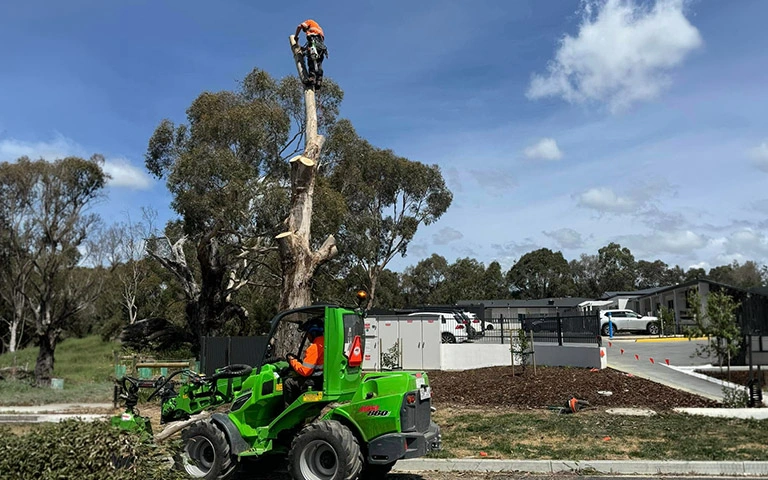
This is where controlled dismantling comes in. Rather than felling the tree in one piece, arborists remove it in planned sections. Each section is cut, held and lowered in a managed way so that nothing lands where it should not. The order in which sections come down, the size of each piece and the way it is lowered are all decisions made before the saw starts.
It is skilled, deliberate work, and it is the reason large-tree removal belongs with trained professionals rather than a general handyman or an ambitious weekend effort.
How Professional Tree Removal Is Planned Around the Property
On a difficult site, the planning can matter as much as the removal itself. A professional tree removal plan considers both the tree and everything around it:
- Houses and garages
- Neighbouring properties
- Fences
- Established landscaping
- Driveways
- Roads
- Pedestrian areas
- Restricted backyards
- Where machinery can and cannot go
The plan sets out where equipment will be positioned, how the crew will work through the tree, where material will be lowered and how timber will be moved off the property. It also covers the practical details that are easy to overlook, such as protecting lawns and paving from machinery, keeping pedestrians clear of the work zone and coordinating with neighbours when limbs overhang a boundary. On a tight suburban block, that plan is the difference between a clean, uneventful day and damage to the very things the removal was meant to protect.
Specialist Equipment Used for Large Tree Removal
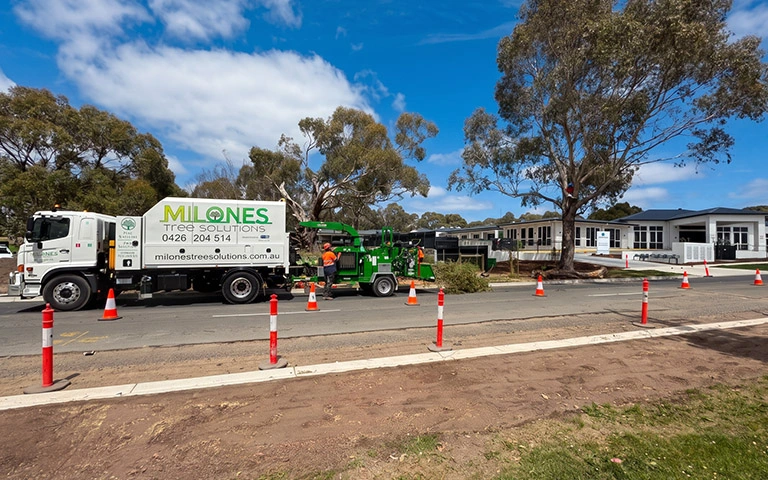
Large-tree projects usually need more than chainsaws. Depending on the tree, the access and the site conditions, arborists may use:
- Climbing equipment
- Rigging systems for lowering heavy sections
- Elevated work platforms
- Wood chippers
- Stump grinders
- Specialised vehicles and machinery
Not every project requires every piece of equipment. The point is that a well-equipped tree removal service selects the right tools for the tree, the access and the site, rather than making the job fit the tools they happen to have.
Large Tree Removal in Restricted or Difficult Locations
Some of the most complex removals involve trees that are hard to reach:
- Large backyard trees with no machinery access
- Trees growing between buildings
- Trees hard against fences
- Trees beside driveways
- Trees near roads and footpaths
Restricted access affects two things: how equipment reaches the tree, and how the cut material gets out. When machinery cannot be brought close, more of the work is done by climbers using rigging, and sections may need to be carried or winched out through narrow spaces. Sections may also need to be cut smaller so they can be moved safely by hand. That takes longer and demands more planning, which is why access is one of the first things assessed when a large removal is quoted
What Happens With the Timber, Branches and Stump?
The job does not finish when the standing tree is down. A large tree produces a significant volume of material, and what happens next should be clear before work starts:
- Branches are typically chipped on site
- Large timber sections may be cut down for removal, or left as firewood if agreed
- Wood chips can be removed or left for garden use
- Green waste is cleared from the work area
- The stump remains unless stump grinding is arranged
When arranging a tree removal service, ask exactly what cleanup and removal are included in the quote. Stump grinding is usually a separate consideration, so confirm whether it is part of the scope if you want the stump gone as well.
When Does a Large Tree Need to Be Removed?
A large tree should never be removed simply because it is large. Mature trees add value, shade and character to a property, and in many cases they can be retained safely with the right care.
Removal becomes the appropriate option when an assessment identifies circumstances such as:
- Significant structural problems that cannot be corrected
- Severe storm damage
- A tree that is dead or in serious decline
- Risk to nearby structures or areas that cannot be managed to an acceptable level
- Development or approved site requirements
- Situations where the options for retaining the tree are limited
In other cases, tree pruning or ongoing management may achieve what is needed without losing the tree. A tree risk assessment is the right way to find out which side of that line your tree sits on.
Choosing a Tree Removal Service for a Large Tree
If an assessment does point to removal, take the time to choose the right provider. For large and complex trees, look for:
- Qualified arborists
- Demonstrated experience with mature and complex trees
- The appropriate equipment for the job
- A site assessment before work begins
- A clear explanation of the proposed work
- Current insurance
- A written quote with a clear scope
- An understanding of council and permit considerations where they apply
A provider who assesses the tree properly, explains their approach and puts the scope in writing is showing you how they will run the job itself. You can read more about Milone’s Tree Solutions and our tree removal services in Melbourne if a large tree on your property needs attention.
Need Advice About a Large Tree on Your Property?
Large trees can require careful assessment and planning before any work begins. Milone’s Tree Solutions can assess the tree, the surrounding property and the access requirements, and recommend an appropriate approach.
Frequently Asked Questions
Usually, yes, but size is only one factor. Height, branch weight, structural condition, access and the buildings or infrastructure around the tree all influence how complex the removal is and what equipment and techniques are required.
No. Large or mature trees should not automatically be considered unsafe. An arborist can assess the tree’s condition and determine whether pruning, ongoing management or removal is the appropriate course of action.
The approach depends on access, the surrounding structures and the condition of the tree. It typically involves controlled dismantling, where the tree is removed in managed sections using climbing, rigging and specialist equipment suited to the space available.
Look for qualified arborists with experience on mature trees, appropriate equipment, current insurance, a proper assessment before work begins and a written quote with a clearly defined scope of work.
It depends. Requirements vary between councils and can depend on the property, the tree species, its size and any overlays that apply. Check your council’s rules before work begins, or ask us about tree removal permits as part of your assessment.
Still have questions?
If you can’t find an answer to your question in the FAQ’s above, you can always contact us and we’ll respond asap.
Get a Quote now!
"*" indicates required fields


