


No property owner can make a home completely fireproof, but the vegetation around a property plays a significant role in how exposed it is during a bushfire. Understanding how to prevent bushfires from threatening your home starts with understanding what is growing around it — the trees, scrub, grass and accumulated plant material that can carry fire towards buildings. This guide explains how vegetation contributes to bushfire risk, what property owners should look for, and how planned vegetation management can help reduce that risk across Melbourne and regional Victoria.
How Vegetation Can Increase Bushfire Risk Around a Property
Bushfires need fuel, and around most properties that fuel is vegetation. Dry grass, dead leaves, fallen bark and twigs are all fine fuels that ignite easily and allow fire to spread quickly across the ground. Dense shrubs and undergrowth add to this by holding larger volumes of combustible material at low and mid levels.
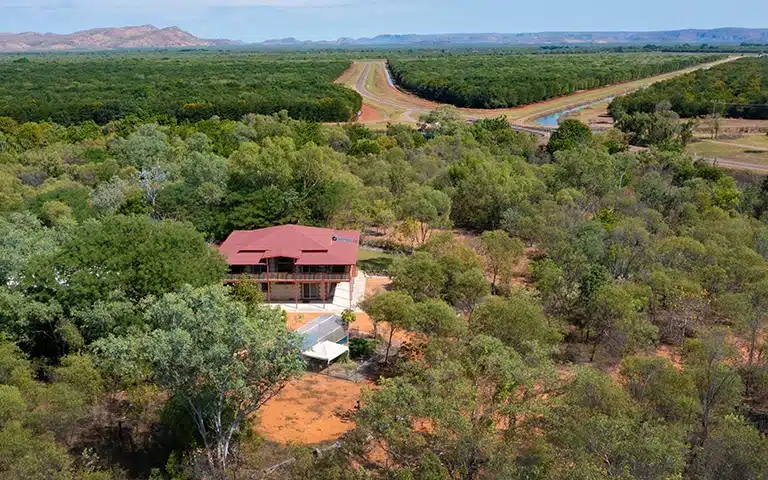
The arrangement of vegetation matters as much as the amount. When shrubs sit beneath tree canopies, or garden beds run continuously from bushland up to the house, they create fuel continuity — an unbroken path that can carry fire from the ground into canopies and towards structures. Vegetation growing hard against walls, fences, decks and sheds is a particular concern, because it can bring flame and radiant heat into direct contact with buildings.
This is the foundation of practical bushfire prevention on private property. It is not about removing every tree. Healthy, well-maintained trees are not inherently dangerous, and established canopies can even reduce wind speed and catch embers. The risk comes from unmanaged vegetation — dry, dense, connected fuel that has been left to accumulate.
What Vegetation Should Property Owners Pay Attention To?
You do not need to be an arborist to make a useful first inspection of your own property. When walking around your block, pay attention to:
- Dead or dying branches in tree canopies, which are drier and more flammable than live growth
- Accumulated leaf litter in garden beds, against fences, under trees and in gutters
- Dry grass, particularly long unslashed grass through summer
- Dense scrub and thickets that hold large volumes of fine, dry material
- Unmanaged undergrowth beneath established trees
- Dead vegetation of any kind — standing dead shrubs, fallen limbs and pruned material left in piles
- Vegetation close to structures, including plants against walls, overhanging decks or touching rooflines
- Connected vegetation, where shrubs, hedges and trees form a continuous line of fuel towards the house
The goal at this stage is risk identification, not indiscriminate clearing. Most properties do not need everything stripped back. They need the right material identified and managed. Where dense scrub or undergrowth has built up beyond what routine garden maintenance can address, professional bush clearing can remove it selectively while retaining the vegetation worth keeping.
Why Simply Removing Trees Isn’t a Bushfire Prevention Strategy
A common reaction after a bad fire season is to want every tree near the house gone. It is understandable, but it is not how effective vegetation management works — and in many parts of Victoria, it is not permitted without approval either.
Planned vegetation management is selective. It starts with assessing what is actually growing on the property: the condition of each significant tree, its location relative to buildings, and whether it genuinely contributes to fire risk. From there, the appropriate treatment might involve canopy management, removing dead material, pruning specific limbs, or thinning undergrowth beneath retained trees — rather than removal.
There are good reasons for this balance. Trees provide shade, privacy, habitat and soil stability, and removing them wholesale can leave a property hotter, windier and more exposed to ember attack across open ground. A dead tree full of dry material close to a house is a very different proposition from a healthy, well-pruned specimen with clear space beneath it.
A professional assessment can determine which vegetation actually requires management and which can safely remain. That judgement — knowing what to keep as well as what to remove — is what separates arborist-led vegetation management from simple clearing.
How Managing Trees Can Help Reduce Vegetation Hazards
For the trees themselves, appropriate management may involve:
- Removing deadwood — dead branches are among the most flammable material in a canopy
- Managing hazardous limbs, particularly those overhanging rooflines, decks or access routes
- Selective pruning to reduce canopy density where appropriate, without stressing the tree
- Addressing damaged or declining trees, which carry more dead, dry material as their condition deteriorates
- Maintaining separation between canopies and structures where required
- Assessing trees near buildings and assets so that management effort goes where it matters most
The right treatment always depends on the individual tree, its species, condition and position on the property. Blanket rules — fixed pruning distances or automatic removal within a set radius — rarely serve a property well, and works in Victoria may be subject to local planning controls. An arborist can recommend what suits each tree and confirm when council approval is needed before work proceeds.
Managing Scrub, Undergrowth and Other Potential Fuel
Trees usually attract the attention, but ground-level and mid-level vegetation often carries the greater share of fire risk. Dense undergrowth holds fine, dry fuel exactly where a fire travels, and it can act as a ladder that lifts flames from the ground into tree canopies.
Effective bushfire mitigation at this level includes:
- Thinning dense scrub rather than letting it accumulate year on year
- Removing built-up dry material — fallen branches, dead shrubs and pruning debris
- Keeping grass short through the fire danger period
- Breaking up continuous bands of vegetation so fire has fewer pathways
- Maintaining ground vegetation regularly, rather than relying on a single one-off clearing
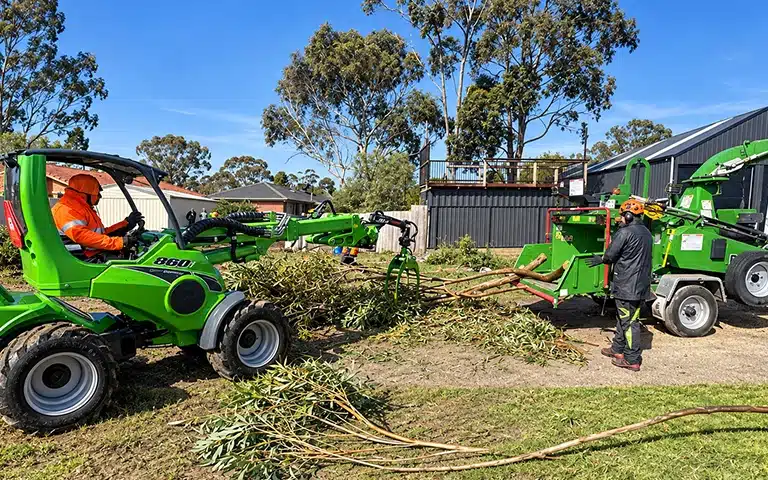
The interaction between vegetation layers is the key point. Grass carries fire to scrub, scrub carries it into canopies, and canopies carry it towards structures. Managing each layer — and the connections between them — is far more effective than focusing on any single element. For larger areas of established scrub, bush clearing services with the right machinery can achieve in days what would take months by hand.
What Is an Asset Protection Zone?
An Asset Protection Zone, or APZ, is a managed area of reduced fuel surrounding a building or other asset. Its purpose is to reduce the intensity of fire that can reach the asset, limit direct flame contact and radiant heat, and give the building — and anyone defending it — a safer buffer.
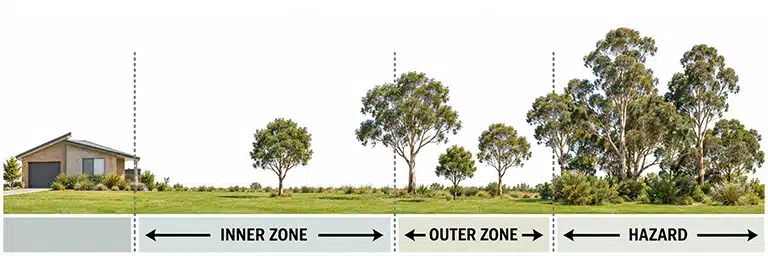
Within an APZ, vegetation is not necessarily eliminated, but it is deliberately managed: fuel loads are kept low, tree canopies are separated rather than continuous, undergrowth is controlled and dead material is removed. Requirements differ from property to property depending on factors such as slope, surrounding vegetation type and any planning or bushfire management overlay that applies, so there is no single set of measurements that suits every block.
If your property sits in a designated bushfire-prone area, or you are building or renovating under bushfire planning requirements, professional Asset Protection Zone services can establish and maintain the defendable space your property needs.
Bushfire Risk Reduction Requires Ongoing Vegetation Management
Vegetation is not static, and neither is bushfire risk. Scrub regrows after clearing, grass flushes with every wet spring and cures dry in summer, leaves and bark keep falling, and trees that were healthy last year may have declined since. A property cleaned up two seasons ago can carry a significant fuel load again today.
That is why effective bushfire prevention strategies treat vegetation management as an ongoing program rather than a once-off job. In practice, that means periodic inspection of regrowth and accumulation, follow-up work at appropriate intervals and reassessment of tree condition over time — with effort concentrated before each fire season. For properties with substantial vegetation, ongoing professional bushfire management programs keep fuel loads down year after year, rather than letting risk quietly rebuild.
Preparing Your Property Before Bushfire Season
Late winter and spring are the ideal time to prepare, before the fire danger period begins and before arborists and vegetation crews reach their busiest months. A practical pre-season checklist for vegetation:
- Walk the property and inspect vegetation around all structures, not just the house
- Identify dead or declining trees and have them assessed
- Check canopies for dead or hazardous branches, especially over rooflines and access routes
- Note where undergrowth and scrub have thickened since last season
- Address accumulated material — leaf litter, fallen limbs and garden waste piles
- Book professional work early, as waiting until a fire-weather warning leaves little time to act
This preparation sits alongside, not instead of, broader bushfire planning. For household bushfire survival planning, warnings and preparedness advice beyond vegetation, refer to the Country Fire Authority (CFA) and other official Victorian fire authorities. Knowing how to prepare for a bushfire involves both — a written plan for your household, and a property whose vegetation has been genuinely managed.
When Should You Call a Professional Arborist?
Some vegetation work is reasonable for a property owner to handle — raking litter, keeping grass down, maintaining garden beds. Other work is not. Call a professional for:
- Large or mature trees, where the scale of the work exceeds domestic equipment
- Branches over rooflines, powerlines or structures
- Hazardous or unstable trees, including storm-damaged and visibly declining trees
- Extensive vegetation or scrub clearing beyond garden scale
- Steep, confined or difficult-access areas
- Any work requiring climbing, elevated platforms or specialised machinery
- Situations involving bushfire planning requirements, overlays or vegetation controls
Beyond safety, the value of professional involvement is judgement. A qualified arborist can assess what genuinely needs management, what can remain, and what approvals may apply — so you reduce real risk without losing trees unnecessarily.
Concerned About Vegetation Around Your Property?
Milone’s Tree Solutions can assess the trees and vegetation on your property and recommend appropriate management to help reduce vegetation-related bushfire risks across Melbourne and regional Victoria.
Frequently Asked Questions
Regular vegetation maintenance can contribute to fuel reduction by managing undergrowth, scrub and other vegetation before it becomes heavily overgrown. It is often carried out as part of broader property maintenance and approved bushfire mitigation works.
Managing dense vegetation, scrub and undergrowth can contribute to fuel reduction around buildings, infrastructure and access tracks. Rural land clearing is often carried out as part of broader property maintenance and approved bushfire mitigation works.
Bush clearing is the removal of dense vegetation, scrub, undergrowth and unwanted plant growth to improve access, prepare land for development or make a property easier to manage. The work can range from selective bush removal to larger vegetation clearing projects.
It depends on the property and the vegetation being removed. Some sites are affected by planning controls, vegetation overlays or permit requirements, and any required approvals should be obtained before clearing work starts.
Still have questions?
If you can’t find an answer to your question in the FAQ’s above, you can always contact us and we’ll respond asap.
Get a Quote now!
"*" indicates required fields


