


Armillaria root rot is quietly destroying Melbourne garden trees from below ground, often progressing for years before homeowners notice a single warning sign. Known as honey fungus, this native pathogen attacks root systems invisibly, making professional tree assessment essential for early detection.
Unlike the European honey fungus discussed in overseas gardening guides, Melbourne’s primary threat comes from Armillaria luteobubalina, a species uniquely adapted to Australian conditions. This fungus can persist in soil and old stumps for up to 50 years, meaning properties built on former bushland may harbour hidden infections dating back decades.
The reality facing Melbourne homeowners is sobering: no chemical cure exists for established infections. By the time distinctive honey-coloured mushrooms appear at a tree’s base each autumn, the damage is often irreversible. Understanding how to identify this silent killer, which trees face the greatest risk, and when to call a qualified arborist can mean the difference between losing one tree and watching an entire garden succumb.
What Is Armillaria Root Rot and How Does It Spread?
Understanding Melbourne’s Native Honey Fungus
When Melbourne gardeners search for information about honey fungus, most resources describe the European species. However, the pathogen threatening Victorian trees is distinctly Australian.
Armillaria luteobubalina was first identified in 1978 at a Mountain Ash plantation near Traralgon, Victoria. Unlike its overseas relatives that typically attack weakened trees, this species is a primary pathogen capable of infecting perfectly healthy specimens. This aggressive behaviour makes it particularly dangerous for established gardens.
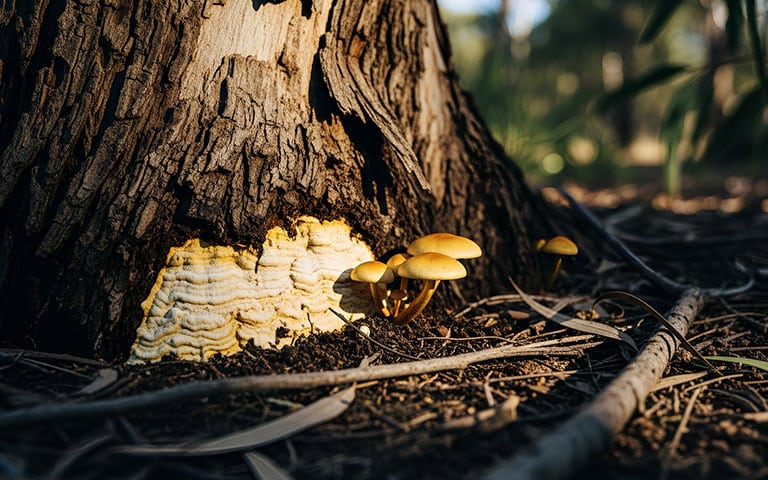
The fungus operates as a white rot fungus, breaking down both cellulose and lignin in wood tissue. During Melbourne’s cooler months from May to July, it produces clusters of honey-coloured mushrooms at the base of infected trees. These fruiting bodies release spores, though this plays a minor role in fungal spread compared to underground transmission.
Three Ways the Fungus Spreads Through Your Garden
Understanding how Armillaria root rot moves through soil helps explain why infections often appear in expanding circles across properties.
The primary transmission method is direct root contact. When healthy roots grow into contact with infected roots, the fungus transfers between trees. Victorian research documents this underground spread advancing at approximately 2.5 metres per year from infection centres.
The fungus also produces rhizomorphs, dark bootlace-like structures that grow through soil seeking new hosts. These cord-like growths can bridge gaps between root systems, extending the infection’s reach.
Perhaps most concerning is the pathogen’s persistence. After tree removal, the fungus continues living on remaining stumps and buried roots for 25 to 50 years. This is why thorough stump grinding becomes essential when managing infected sites, as old root material serves as a continuous reservoir of infection for any susceptible trees planted nearby.
For detailed information on identifying and managing this disease, Agriculture Victoria provides authoritative guidance for Victorian property owners.
Which Melbourne Trees Are Most Vulnerable to Armillaria?
Native Australian Species at Risk
Melbourne’s beloved native trees face significant threat from Armillaria root rot, with eucalypts ranking among the most susceptible species.
Research confirms that eucalyptus varieties common across Melbourne gardens are highly vulnerable. Mountain Ash, Sydney Blue Gum, and Shining Gum all succumb readily to infection. Acacias present similar concerns, with Blackwood (Acacia melanoxylon) documented as a frequent host.
The Banksia family and related Proteaceae species show alarming vulnerability. CSIRO research indicates these plants represent 26% of deaths in affected coastal vegetation areas. This poses particular concern for Melbourne gardeners cultivating native-themed landscapes.
One pattern offers some reassurance: young trees under 20 years old face the greatest risk. Healthy, established specimens develop some resistance through callus formation, making ongoing tree health monitoring worthwhile for mature trees.
Common Garden and Fruit Trees Under Threat
Beyond natives, many popular ornamental trees Melbourne gardeners cherish are equally at risk from this tree root rot.
Stone fruit trees rank among the most susceptible rootstocks. If your backyard includes any of these favourites, vigilance is essential:
- Apricots, peaches, and nectarines
- Cherries and plums
- Ornamental flowering cherries (Prunus species)
Citrus trees of all cultivars face vulnerability, particularly when planted on land previously cleared of native eucalypt forest. Properties in Melbourne’s eastern and outer suburbs developed on former bushland carry elevated historical risk.
European deciduous ornamental trees also feature prominently on the susceptibility list:
- Oaks, willows, and birches
- Privet and liquidambar
- Lilac and cotoneaster
Popular flowering shrubs including rhododendrons, azaleas, roses, and hydrangeas show moderate to high susceptibility. Grapevines, walnuts, and avocados round out the concerning list of garden favourites vulnerable to honey fungus attack.
Recognising the Warning Signs of Armillaria Infection
Above-Ground Symptoms to Watch For
The challenge with Armillaria root rot is that visible tree disease symptoms typically appear only after significant underground damage has occurred. Knowing what to look for can help you catch infections before trees become unsalvageable.
Watch for these above-ground warning signs throughout the year:
- Unexplained leaf yellowing outside normal seasonal patterns
- Progressive crown dieback starting at branch tips and spreading inward
- Stunted growth with smaller than average leaves
- Premature autumn colouring appearing weeks before neighbouring trees
- Dead tops in eucalypts, often accompanied by kino (gum) exudation at the trunk base
One particularly telling indicator is the stress crop phenomenon. Trees may produce abnormally heavy fruit, flower, or seed yields just before death. This represents a final reproductive effort by a dying organism and should prompt immediate professional assessment.
For a comprehensive guide to evaluating declining trees, our article on early signs of tree fungus and treatment options covers additional symptoms worth monitoring.
Diagnostic Signs Beneath the Bark
While above-ground symptoms suggest problems, definitive tree diagnosis requires hands-on investigation at the trunk base.
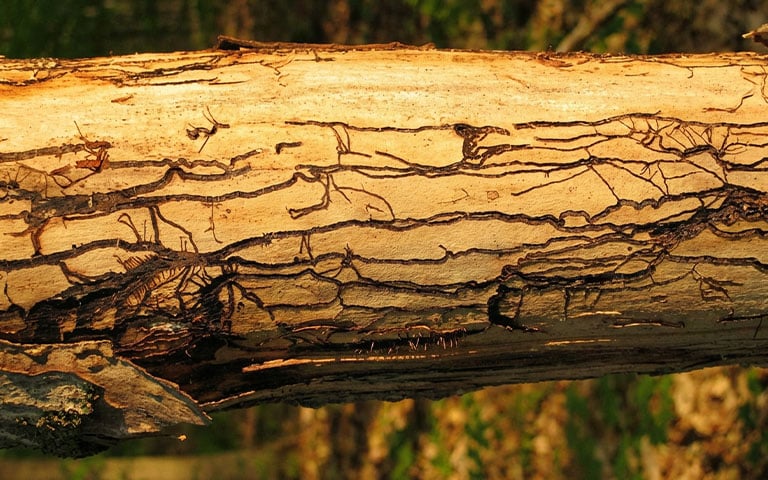
The most reliable indicator is the presence of white mycelial fans. These creamy, felt-like sheets grow between bark and wood, appearing papery thin with a distinctive mushroom smell. This feature is virtually unique to Armillaria on living tissue.
Additional diagnostic signs include:
- Black, shoestring-like rhizomorphs attached to roots
- Loose or easily peeled bark at the trunk base
- Honey fungus mushrooms clustered at the tree base during Melbourne’s May to July fruiting season
- Wet, decaying wood beneath the bark surface
Importantly, the absence of mushrooms does not indicate absence of disease. Fruiting is erratic and weather-dependent, so mycelial fans remain the most reliable diagnostic feature. According to Agriculture Victoria, laboratory tissue analysis provides definitive species confirmation when visual diagnosis proves inconclusive.
If you’re uncertain whether your tree shows signs of decline, our guide on how to tell if a tree is dead can help you assess the situation.
Treatment Options and Their Honest Limitations
Why There Is No Cure for Armillaria Root Rot
Melbourne homeowners searching for tree fungus treatment options face a sobering reality: no effective cure exists for established Armillaria root rot infections.
The challenge lies in where the fungus lives. It grows protected beneath bark and deep within soil where chemicals simply cannot penetrate. No post-plant fungicides effectively treat established infections, regardless of marketing claims you may encounter.
Soil fumigation can reduce Armillaria populations but rarely eliminates them entirely. For home gardens, this approach proves impractical. It requires licensed applicators, expensive professional-grade chemicals, and many effective products are now restricted or banned in Australia. Agriculture Victoria confirms there is no registered chemical treatment available for home gardeners.
Cultural Management Strategies That Work
While curing infected trees remains impossible, cultural disease control methods can slow progression and protect surrounding plants.
Root collar excavation stands as the most effective management technique. This involves removing soil from around the trunk base to expose the root flare to air. Research documented this approach preventing tree mortality at citrus plantation sites for over 11 years. The key is keeping excavated areas permanently uncovered, as exposure creates conditions unfavourable to Armillaria growth.
For trees showing early infection signs, Agriculture Victoria recommends the following approach:
- Remove soil to a 750mm radius around affected trees
- Cut out and burn all diseased bark and roots
- Paint wounds with plastic paint to prevent reinfection
- Leave the area permanently uncovered
Tree stress management plays an equally important role in slowing disease progression:
- Maintain appropriate watering schedules, avoiding both drought stress and waterlogging
- Prevent root wounds from mowers and construction
- Ensure adequate nutrition through proper fertilisation
- Schedule regular tree trimming to reduce canopy stress
Proper mulching technique matters more than many gardeners realise. Apply mulch in a donut shape, maintaining 50 to 75mm depth while leaving a 25 to 50mm gap around the trunk. Never pile mulch against the trunk in “volcano” formations, as this creates the moist conditions honey fungus thrives in.
When removing infected material, proper disposal is critical. Burn all diseased wood on site rather than using tree chipping and mulching services for infected material. Spreading contaminated mulch spreads the disease to new areas of your garden.
When to Call a Professional Arborist
Situations Requiring Expert Assessment
While homeowners can monitor for symptoms and implement preventive practices, certain situations with Armillaria root rot demand professional tree inspection from a qualified Melbourne arborist.
You should arrange an arborist tree assessment when you observe any of the following scenarios:
- Multiple trees showing simultaneous decline across your property
- Death spreading in a radial pattern, suggesting an underground infection centre
- Valuable mature trees requiring a preservation strategy
- After storm damage to assess structural integrity of potentially compromised trees
- Before purchasing a property with dead or dying trees
- When your own inspection proves inconclusive and you need definitive diagnosis
Early arborist assessment often saves money in the long run. Catching infections before they spread to neighbouring trees prevents the cascading losses that can devastate entire garden landscapes.
What Qualified Arborists Can Do That Homeowners Cannot
Professional arborists bring diagnostic capabilities and equipment unavailable to homeowners, making accurate tree risk assessment possible.
Specialised diagnostic techniques include:
- Pneumatic air spade excavation that examines root systems without causing additional damage
- Resistograph testing to measure internal decay extent within trunks and major roots
- Sonic tomography that maps decay patterns invisible from the outside
- Laboratory tissue analysis for definitive species identification when visual diagnosis is uncertain
When it comes to tree risk assessment, professionals apply established protocols including QTRA (Quantified Tree Risk Assessment), the ISA’s TRAQ system, and the Australian developed AANZAA-Risk/24 methodology. These frameworks help determine whether trees can be saved or require hazardous tree removal.
In Victoria, AQF Level 5 consulting arborists holding a Diploma of Arboriculture can provide formal reports required for council permit applications. This qualification matters when you need documentation for insurance claims or planning approvals.
Trees typically requiring removal rather than treatment attempts include those with greater than 50% canopy death, more than 30% trunk decay, girdling at the trunk base, or severely compromised structural roots. A qualified arborist can make this determination safely and provide the documentation needed for council-compliant tree removal.
Protect Your Melbourne Garden from This Silent Threat
Armillaria root rot presents Melbourne homeowners with a patient, persistent adversary. Operating invisibly underground, this honey fungus can destroy trees for years before any symptoms appear above the surface.
The key takeaways for protecting your garden are clear. No chemical cure exists, making prevention and early intervention essential. Properties in Melbourne’s outer suburbs developed on former bushland face elevated historical risk from infections dating back decades. Professional arborist assessment provides the diagnostic certainty needed when symptoms emerge, along with safe removal when trees cannot be saved.
We recommend annual inspections during the May to July fruiting season, watching for mushroom clusters and declining tree health. If you suspect Armillaria root rot in your garden, early professional evaluation can prevent the spread to neighbouring trees and save your landscape from cascading losses.
Contact Milone’s Tree Solutions to arrange a comprehensive tree health assessment with our qualified Melbourne arborists.
Armillaria Root Rot Frequently Asked Questions
Armillaria root rot produces distinctive signs both above and below ground. Above the surface, watch for unexplained leaf yellowing, progressive crown dieback starting at branch tips, stunted growth, and premature autumn colouring. The most reliable diagnostic feature requires examining the trunk base: peel back loose bark to reveal creamy white mycelial fans growing between bark and wood, accompanied by a distinctive mushroom smell. You may also find black, bootlace-like rhizomorphs attached to roots. During Melbourne’s May to July fruiting season, clusters of honey fungus mushrooms with honey-coloured caps often appear at the base of infected trees.
No effective cure exists for established Armillaria root rot infections. The fungus grows protected beneath bark and deep within soil where fungicides cannot penetrate. While soil fumigation can reduce fungal populations, it rarely eliminates them entirely and proves impractical for home gardens due to cost and chemical restrictions. Management focuses on cultural disease control methods including root collar excavation to expose the trunk base to air, removing and burning infected material, reducing tree stress through proper watering and nutrition, and preventing spread to healthy trees. For valuable trees showing early symptoms, these techniques can extend tree life significantly but cannot reverse established infections.
Preventing Armillaria root rot spread requires addressing the fungus both above and below ground. Remove infected trees including as many roots as possible, and burn all infected material on site rather than chipping it for mulch. Thoroughly grind stumps to remove food sources, as the fungus can persist in dead wood for 25 to 50 years. Leave affected areas fallow or plant with lawn grass for two to three years before replanting susceptible species. Create physical barriers by trenching between infected and healthy trees to sever root connections. When replanting, choose resistant species and maintain proper spacing to limit root contact between trees. Regular professional tree assessments help detect new infections before they spread.
Several tree species show genuine resistance to Armillaria root rot and make excellent choices for replanting affected Melbourne gardens. Resistant trees include ginkgo, catalpa, various larch species, honey locust, and London plane. Boxwood rates as very low risk and works well for hedging in affected areas. Perhaps most useful for Melbourne gardeners: monocotyledons appear virtually immune to honey fungus. This category includes palms, ornamental grasses, bamboo, agaves, and lawn grasses, all of which can safely occupy sites with infection history. When planning replacements, avoid high-risk species including privet, all Prunus varieties (stone fruits and ornamental cherries), oaks, walnuts, rhododendrons, azaleas, and lilacs.
Contact a qualified Melbourne arborist when you observe multiple trees declining simultaneously, death spreading in a radial pattern suggesting an infection centre, or when your own inspection proves inconclusive. Professional assessment is essential before purchasing property with dead or dying trees, after storm damage to evaluate structural integrity, or when valuable mature trees require a preservation strategy. AQF Level 5 consulting arborists can provide formal reports required for council permit applications and insurance documentation. Professionals use specialised equipment including pneumatic air spades, resistograph testing, and sonic tomography to diagnose infections accurately and assess tree risk. Early professional intervention often prevents cascading losses across entire garden landscapes. Book a tree health assessment if you suspect infection.
Still have questions?
If you can’t find an answer to your question in the FAQ’s above, you can always contact us and we’ll respond asap.
Get a Quote now!
"*" indicates required fields


